

In the electronics world, the terms lab power supply and bench power supply are often used interchangeably — but subtle differences exist between lab power supply and bench power supply in design, features, and intended use. Whether you're a hobbyist, student, repair technician, or professional engineer, picking the right type can greatly improve your workflow and project outcomes.
In this article, we'll break down lab power supply vs bench power supply, highlight their key differences, typical applications, and recommend reliable programmable options to suit both categories.
What is a Bench Power Supply?
A bench power supply (also called benchtop DC power supply) is designed specifically for use on a workbench or desktop. These units are compact, user-friendly, and optimized for everyday electronics work such as prototyping, testing circuits, powering development boards, and debugging.
Typical characteristics of bench power supplies:
- Compact footprint for limited desk space
- Clear digital displays and intuitive controls
- Programmable features (voltage/current presets, memory recall)
- Current limiting, over-voltage/over-current protection
- Often single or dual output, 0–30V or 0–60V range
- Affordable and ideal for hobbyists, makers, and general lab use
Fact Statement: Market Dominance of Benchtop Power Supplies for General Use
Conclusion:Benchtop (or bench) DC power supplies dominate the market for hobbyist, educational, prototyping, and general electronics applications due to their compact design, ease of use, and cost-effectiveness.
Data/Case:According to the Bench Power Supply Market Report by Fortune Business Insights, the global bench power supply market is projected to grow from USD 701.67 million in 2025 to USD 1,076.28 million by 2032 at a CAGR of 6.30%, with single-channel bench models expected to capture approximately 71.69% market share in 2025, driven by their reliability and suitability for basic testing and prototyping tasks.
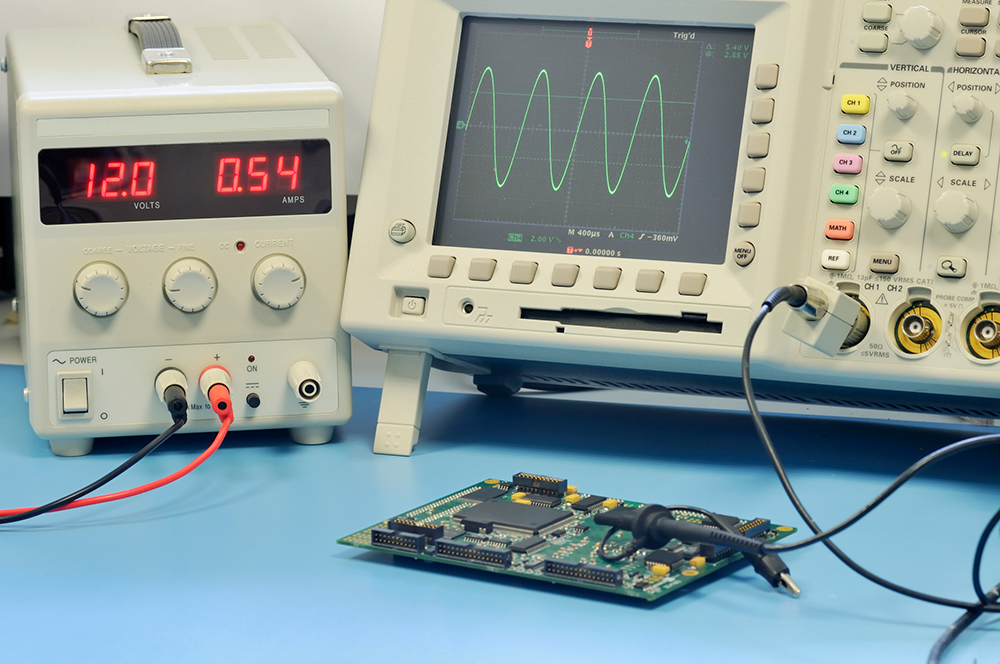
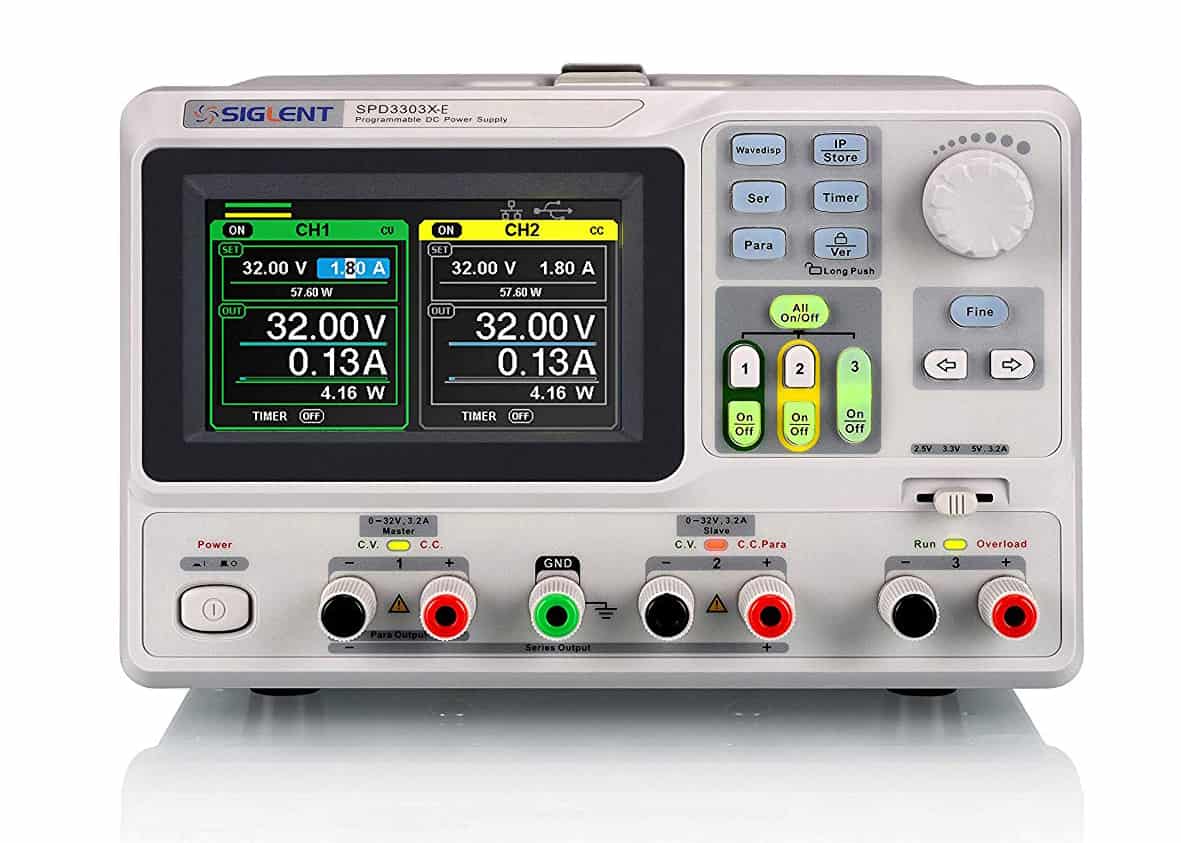
Here are some excellent examples of modern programmable bench power supplies in real workbench setups:
What is a Lab Power Supply?
A lab power supply (laboratory power supply) is a broader category, often referring to higher-end, more precise, or more rugged units built for demanding research, calibration, production testing, or industrial lab environments. While many lab supplies are also benchtop, the term frequently implies:
- Higher accuracy and resolution (e.g., 0.01% regulation)
- Better line/load regulation and low noise/ripple
- Advanced features (remote sensing, GPIB/USB/LAN control, data logging)
- Wider voltage/current ranges or higher power
- Rack-mountable designs for system integration
- Greater durability for long-term or continuous use
Fact Statement: Superior Precision and Noise Performance in Lab-Grade Supplies
Conclusion:Lab power supplies provide significantly higher accuracy, stability, and lower output noise/ripple compared to standard bench supplies, making them essential for sensitive analog circuits, precision calibration, and research applications where even small disturbances can affect measurements.
Data/Case:High-end lab supplies from manufacturers like Keysight and Tektronix typically achieve ripple and noise below 1 mV RMS (often <0.5 mV RMS in CV mode) with excellent load/line regulation (<0.01–0.05%), far outperforming typical bench models (which may have 10–30 mVpp ripple); resources from Altium and Tektronix emphasize these differences for professional R&D and production testing environments.
Professional lab setups often feature these more sophisticated supplies:

And here’s a close-up of a high-precision lab-grade front panel:

Some lab power supplies are even designed for rack mounting in test systems:

Lab Power Supply vs Bench Power Supply: Quick Comparison
| Feature | Bench Power Supply | Lab Power Supply |
|---|---|---|
| Primary Use | Hobby, prototyping, education, repair | Research, calibration, production, precision |
| Accuracy & Stability | Good to very good | Excellent to ultra-high |
| Noise & Ripple | Acceptable for most work | Very low (critical for sensitive circuits) |
| Programmability | Common, user-friendly | Advanced (SCPI, remote interfaces) |
| Size & Form Factor | Compact desktop | Desktop or rack-mount |
| Price Range | Budget to mid-range | Mid to high-end |
| Typical User | Hobbyists, students, makers | Engineers, labs, R&D, manufacturing |
Fact Statement: Blurring Lines and Growth in Programmable Bench Models for Hybrid Use
Conclusion:Modern programmable bench power supplies increasingly bridge the gap to lab-grade performance, offering excellent value for advanced hobbyists, small labs, and mixed-use environments where ultra-high precision is not strictly required.
Data/Case:The global bench power supply market continues strong growth (CAGR 6.30% through 2032 per Fortune Business Insights), fueled by demand for feature-rich programmable units with high accuracy (e.g., 4-digit resolution, multi-protection) that perform reliably in both bench and light lab scenarios, as evidenced by user reviews praising stability and precision in real-world electronics work.
In reality, the line between the two is often blurry — many high-quality programmable bench supplies perform exceptionally well in lab environments too.
Which One Should You Choose?
- Choose a bench power supply if: You're working on personal projects, Arduino/Raspberry Pi, audio circuits, or general testing — and want something affordable, easy to use, and space-efficient.
- Choose a lab power supply if: You need ultra-low noise, exceptional accuracy, remote control, or higher power for demanding applications like semiconductor testing, sensor calibration, or long-duration experiments.
For most users (including advanced hobbyists and small labs), a well-built programmable bench power supply offers the best balance of performance and value.
Recommended Kiprim Programmable DC Power Supplies
Kiprim delivers excellent programmable options that serve both bench and lab needs with high accuracy (e.g., 10mV/1mA resolution), multi-layer protection (OVP, OCP, OTP), intelligent cooling, PC software control, and consistent user praise for stability and build quality (e.g., strong Amazon reviews highlighting precision and reliability):
- Kiprim DC310Pro 2-in-1 Programmable Power Supply and Multimeter (0-30V/0-10A) — Versatile bench favorite with built-in multimeter
- Programmable DC Power Supply (0-30V/0-10A, 110V Input) — Clean, reliable everyday performer
Higher voltage/power models for more demanding bench or light lab use:
- Kiprim DC605Pro 2-in-1 Programmable Power Supply (0-60V/0-5A)
- Kiprim DC605S Programmable DC Power Supply (0-60V/0-5A, 110V Input)
For serious power requirements:
Browse the complete lineup: Kiprim DC Power Supplies Collection
Final Thoughts
In practice, the best bench power supply often doubles as a capable lab power supply for most users — especially when it offers programmable control, solid accuracy, and robust protection features. Unless your work demands ultra-precision instrumentation or system integration, a high-quality programmable bench model will serve you exceptionally well.
Upgrade your setup with Kiprim's reliable, feature-packed DC power supplies and enjoy professional-grade performance on your bench today!
0 Kommentare