

When working with electronics, understanding DC power supply and the difference between AC (Alternating Current) and DC (Direct Current) is essential for projects, testing, and repairs.
In this guide, we'll break down AC vs DC power supply, explain how they work, compare their characteristics, and show why most bench work relies on DC power supplies. Whether you're a beginner or refreshing your basics, understanding this will help you pick the right tools.
The Basics: AC vs DC Current Waveforms
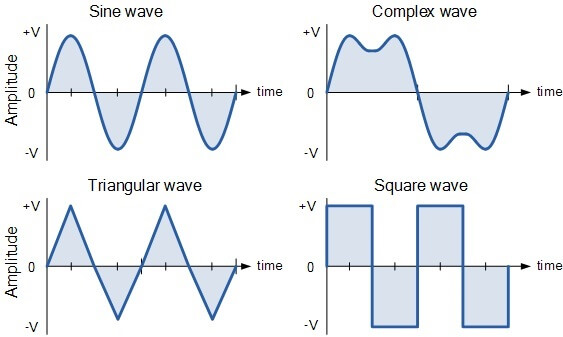
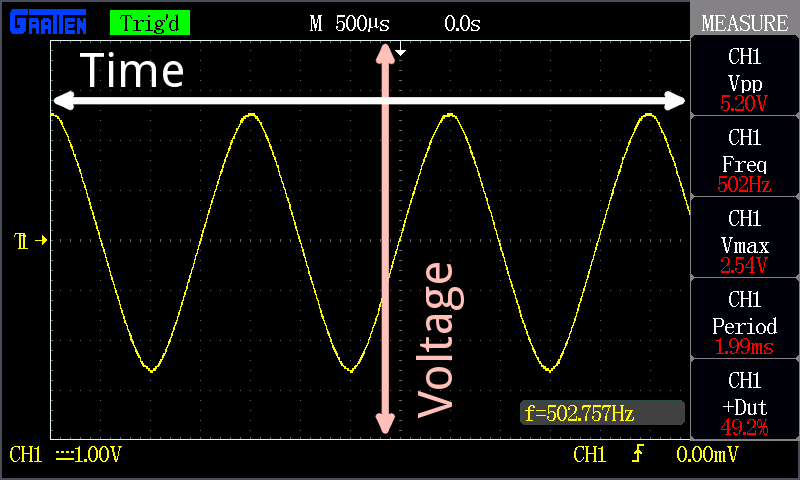
AC (Alternating Current) constantly changes direction and voltage over time, typically in a smooth sine wave. DC (Direct Current) flows in one constant direction with steady voltage.
Here's a clear visual comparison of the two waveforms:
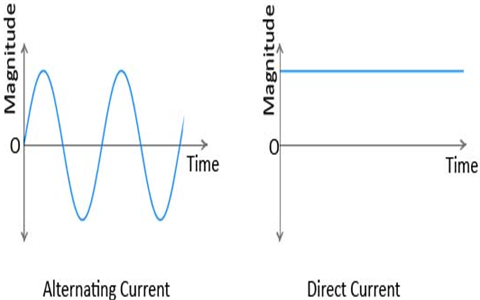
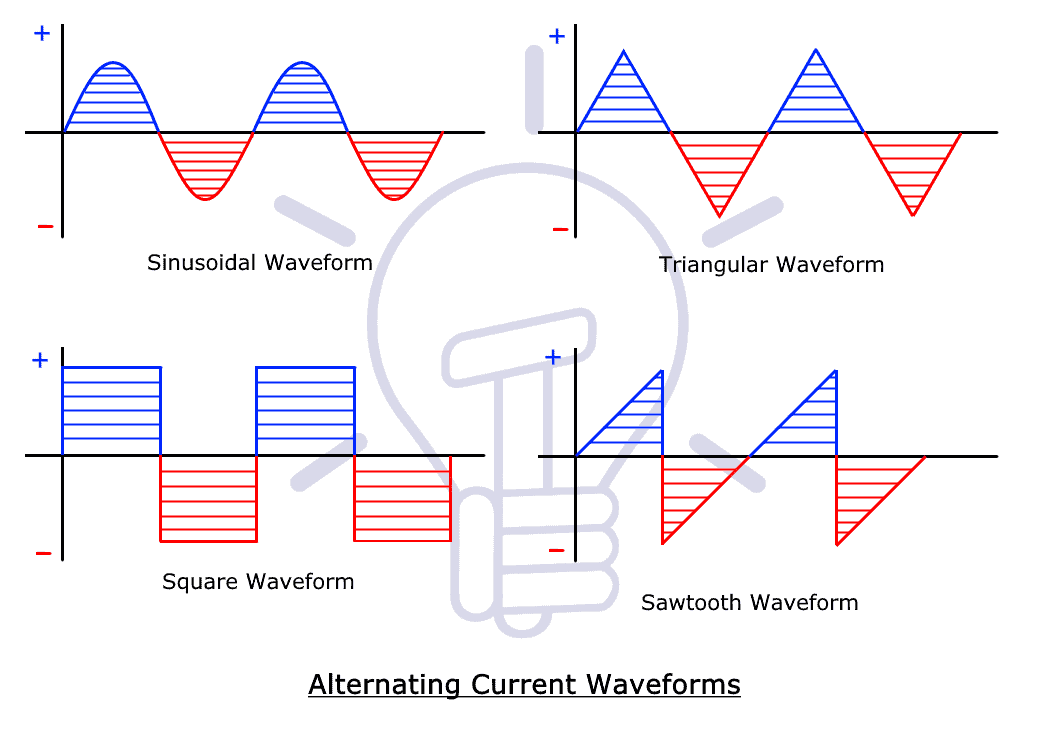
You can see the oscillating sine wave of AC versus the flat, steady line of DC on an oscilloscope:
Where Do We Encounter AC and DC in Real Life?
AC Power
- Comes from your wall outlets (120V/60Hz in the US, 230V/50Hz in many other countries)
- Designed for long-distance transmission with minimal losses
- Powers large appliances, lights, and motors
Typical household AC wall outlets look like this:

DC Power
- Flows in one direction (positive to negative)
- Used by almost all electronic circuits, batteries, USB devices, LEDs, microcontrollers, and more
- Most modern electronics require stable, low-voltage DC
Power Supplies: AC vs DC Explained
AC Power Supply
- Outputs alternating current (e.g., wall transformers that step down AC voltage)
- Common for simple applications like doorbells, some chargers, or AC motors
- Rarely used directly on electronics benches because most circuits need DC
DC Power Supply (especially bench/lab types)
- Converts AC wall power into adjustable, regulated DC
- Allows precise control of voltage and current
- Essential for testing, prototyping, repairing phones/laptops, powering Arduino/Raspberry Pi projects, and more
See these real-world bench DC power supplies in action on a workbench:


Key Differences: AC vs DC Power Supply at a Glance
- Direction of Flow — AC reverses; DC is constant
- Voltage Stability — DC is steady (ideal for electronics); AC varies
- Transmission — AC better for long distances; DC for short, precise applications
- Use Cases — AC for household power; DC for batteries, circuits, and lab work
- Conversion — Most devices need an AC-to-DC power supply to function
Why Choose a Bench DC Power Supply for Your Projects?
A quality adjustable DC power supply gives you:
- Precise voltage/current control (e.g., 3.3V for logic, 12V for motors)
- Current limiting to protect components
- Constant Voltage (CV) and Constant Current (CC) modes
- Digital displays for accurate monitoring
Whether you're a hobbyist or professional, it quickly becomes your most-used tool.
Ready to Upgrade Your Setup?
Explore reliable, programmable DC power supplies perfect for beginners and pros alike:
👉 KIPRIM DC Power Supplies Collection
Featured models include:
- KIPRIM DC310Pro – 2-in-1 Programmable Power Supply & Multimeter (0-30V, 0-10A) — Versatile with built-in multimeter
- Programmable DC Power Supply (0-30V, 0-10A, 110V Input) — Great value for everyday bench use
- KIPRIM DC605Pro – 2-in-1 (0-60V, 0-5A) — Higher voltage for more demanding projects
- KIPRIM DC605S (0-60V, 0-5A, 110V Input) — Reliable and precise
- KIPRIM DC620S – Programmable 400W (0-60V, 0-20A) — High-power option for bigger loads
Mastering AC vs DC power supply differences is the foundation of safe, effective electronics work. Get the right DC supply, and you'll be ready for any project!
Happy powering! 🔌⚡
0 Kommentare