

In the world of electronics design, prototyping, and testing, one of the most valuable safety features of a modern DC power supply is current limiting. This essential mechanism prevents excessive current from damaging your circuits, components, or even the power supply itself. Whether you're a hobbyist building your first LED project or a professional engineer testing sensitive ICs, understanding current limiting can save you time, money, and frustration.
In this article, we'll explain what current limiting is, how it works, why it's critical for circuit protection, and how to use it effectively with high-quality programmable DC power supplies.
What is Current Limiting in a DC Power Supply?
Current limiting (also called constant current or CC mode) is a control feature that automatically restricts the output current to a user-set maximum value, even if the connected load tries to draw more. When the current reaches the preset limit, the power supply switches from constant voltage (CV) mode to constant current (CC) mode, reducing the output voltage as needed to maintain the current at the set level.
This behavior protects against:
- Short circuits
- Overloaded components
- Faulty wiring
- Inrush current spikes
- Accidental misconfiguration
Without current limiting, a short circuit could instantly destroy components or cause the power supply to overheat.
Here's a classic illustration showing the transition from constant voltage to constant current mode (the "knee" point where limiting kicks in):
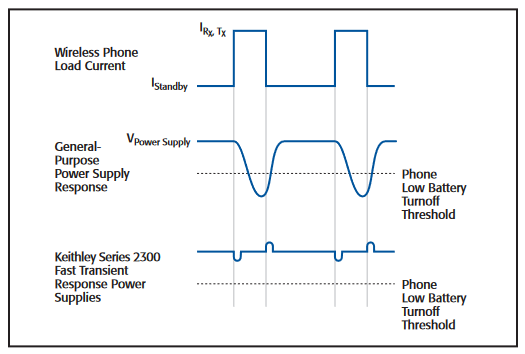
This graph demonstrates how the power supply maintains stable voltage until the current limit is reached, then holds current constant while voltage drops.
How Current Limiting Works in Practice
Most modern benchtop and programmable DC power supplies operate in one of two primary modes:
- Constant Voltage (CV) Mode — The supply delivers the set voltage, and current varies depending on the load (as long as it stays below the limit).
- Constant Current (CC) Mode — When current hits the limit, the supply reduces voltage to keep current steady.
A common real-world example is charging batteries or driving LEDs. If you set 5V and 500mA limit, the supply will provide 5V until the current reaches 500mA — then it automatically lowers voltage to maintain exactly 500mA.
See this practical lab setup showing a DC power supply in current limiting mode during testing:
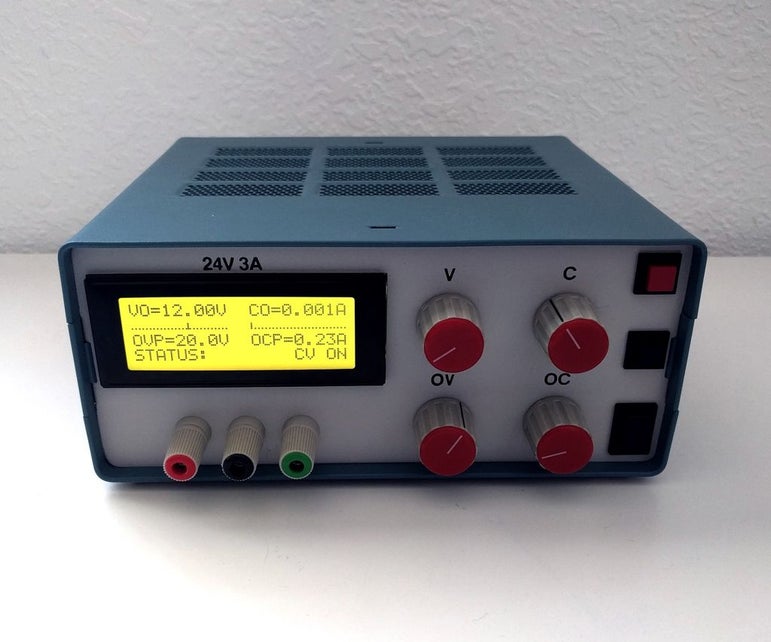
Notice how the display often indicates CC mode when limiting is active, giving you instant visual feedback.
Why Current Limiting is Essential for Circuit Protection
Current limiting acts as the first line of defense in your lab or workshop. Here are key benefits:
- Prevents component burnout (resistors, ICs, transistors, etc.)
- Safely tests circuits under fault conditions
- Protects expensive prototypes during debugging
- Enables safe battery charging and LED/string lighting experiments
- Reduces risk of fire or damage during accidental shorts
This diagram illustrates how current limiting protects a circuit from destructive overcurrent:
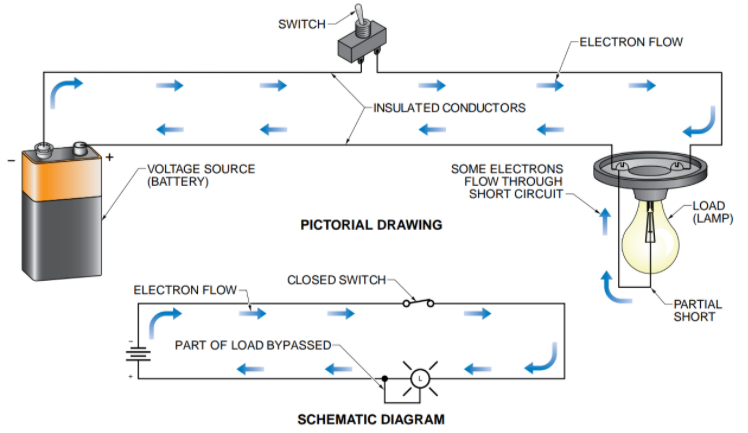
Without this protection, excessive current could quickly lead to catastrophic failure.
Choosing a DC Power Supply with Reliable Current Limiting
For dependable current limiting performance, look for programmable DC power supplies with:
- Precise current setting resolution (1mA or better)
- Fast response time to limit activation
- Clear CV/CC mode indicators
- Over-current protection (OCP) as backup
Kiprim offers excellent options that combine accurate voltage/current control with robust current limiting:
- The Kiprim DC310Pro 2-in-1 Programmable Power Supply and Multimeter (0-30V/0-10A) — Perfect for most bench work with integrated multimeter functionality.
- Programmable DC Power Supply (0-30V/0-10A, 110V Input) — Reliable and straightforward for everyday use.
For higher voltage applications:
- Kiprim DC605Pro 2-in-1 Programmable Power Supply (0-60V/0-5A)
- Kiprim DC605S Programmable DC Power Supply (0-60V/0-5A, 110V Input)
Need more power? The Kiprim DC620S Programmable 400W DC Power Supply (0-60V/0-20A) delivers serious current with excellent limiting control.
Browse the full collection here: Kiprim DC Power Supplies Collection
Final Thoughts: Make Current Limiting Your Safety Net
Current limiting isn't just a nice-to-have feature — it's a must-have for anyone who values their time, components, and safety. By setting an appropriate current limit before powering up any circuit, you create a protective barrier that catches mistakes before they become expensive disasters.
Invest in a quality programmable DC power supply with precise and fast current limiting, and you'll work with greater confidence and peace of mind.
Ready to upgrade your bench? Check out Kiprim's reliable, feature-packed DC power supplies today and experience professional-grade circuit protection at an accessible price.
0 Kommentare