
Using a DC power supply (bench or lab power supply) to charge batteries is a common and powerful technique for hobbyists, DIYers, repair techs, and engineers. It gives you precise control over voltage and current — far better than many off-the-shelf chargers — but it also requires careful setup to avoid damaging expensive battery packs.
In this guide, we'll cover the essentials of DC power supply battery charging, explain the critical CC-CV method, safety tips, and recommend reliable programmable models that make the process safe and effective.
Why Use a Bench DC Power Supply for Charging Batteries?
A quality programmable DC power supply excels at battery charging because it lets you:
- Set exact voltage and current limits
- Switch automatically between Constant Current (CC) and Constant Voltage (CV) modes
- Monitor real-time charging progress
- Safely charge various chemistries: Li-ion, LiPo, lead-acid, NiMH, etc.
- Test and revive partially damaged cells
Here's a practical setup showing a bench power supply connected to a battery pack during charging — notice the clean connections and monitoring:

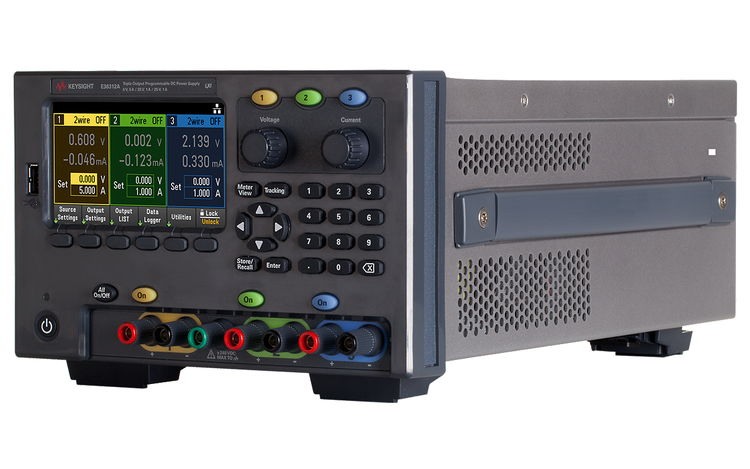
And another view of a programmable supply in use, with clear display of voltage and current during the process:
Understanding CC-CV Charging: The Gold Standard
Most modern rechargeable batteries (especially lithium-based) use the Constant Current – Constant Voltage (CC-CV) method:
- Constant Current (CC) Phase — The supply delivers a fixed current (e.g., 0.5C–1C rate) while voltage rises gradually.
- Constant Voltage (CV) Phase — Once the battery reaches its target voltage (e.g., 4.2V per cell for Li-ion), the supply holds voltage steady and current tapers off until the battery is full.
This graph illustrates the classic CC-CV charging curve for a lithium-ion battery:
Here's a clearer detailed view of the voltage and current behavior over time during CC-CV charging:
And another professional representation showing the transition point and taper-off:
Key Rule: Always set the voltage limit slightly below the battery's maximum rated voltage (e.g., 4.10–4.15V per cell for longevity) and set current to a safe rate for your battery's capacity.
Safety Tips When Charging Batteries with a DC Power Supply
- Never exceed the battery's maximum voltage or current rating
- Use proper current limiting — the supply must switch to CV mode automatically
- Monitor temperature — stop if the battery gets hot
- Use fuses or protection circuits for Li-ion/LiPo packs
- Disconnect when charging is complete (most supplies don't auto-cutoff like dedicated chargers)
- For lead-acid or other types, adjust settings accordingly (e.g., float voltage for lead-acid)
This example shows a safe bench setup for charging a 12V lead-acid battery with controlled parameters:

Best Kiprim Programmable DC Power Supplies for Battery Charging
Kiprim's programmable models are perfect for battery charging thanks to precise control, fast CC-to-CV transition, clear CV/CC indicators, and robust current limiting.
Top choices for most battery projects:
- Kiprim DC310Pro 2-in-1 Programmable Power Supply and Multimeter (0-30V/0-10A) — Ideal for small Li-ion packs, 18650 cells, and hobby batteries; built-in multimeter for monitoring
- Programmable DC Power Supply (0-30V/0-10A, 110V Input) — Reliable and straightforward for everyday charging
Higher voltage for larger packs (e.g., e-bike, drone, 24V/48V systems):
- Kiprim DC605Pro 2-in-1 Programmable Power Supply (0-60V/0-5A)
- Kiprim DC605S Programmable DC Power Supply (0-60V/0-5A, 110V Input)
High-power needs (large lead-acid, multiple cells in series):
Explore the full lineup here: Kiprim DC Power Supplies Collection
Final Thoughts: Charge Smarter and Safer
A programmable DC power supply gives you unmatched flexibility and control for battery charging — whether reviving old cells, building custom packs, or maintaining lead-acid batteries. The key is understanding CC-CV behavior, setting conservative limits, and using a reliable unit with excellent current regulation.
With Kiprim's feature-packed programmable supplies, you get professional-grade performance at an accessible price — perfect for safe, effective battery charging at home or in the lab.
Ready to take control of your battery projects? Grab a Kiprim DC power supply today and charge with confidence! 🔋
0 Kommentare