
Whether you're designing LED strips, custom lighting projects, testing LED drivers, or debugging faulty circuits, a reliable DC power supply is indispensable. It provides precise voltage control, adjustable current limiting, and real-time monitoring — features that make LED testing safer, faster, and more accurate than using batteries or fixed adapters.
In this article, we'll explore why a programmable DC power supply for LED testing is a game-changer, key techniques for effective debugging, and the best Kiprim models to power your LED projects.
Why Choose a Bench DC Power Supply for LED Work?
LEDs are current-driven devices, and their forward voltage varies with temperature, color, and current. A good power supply lets you:
- Set exact voltage (e.g., 3.3V, 5V, 12V, 24V) for different LED types
- Limit current precisely to prevent burnout (critical for high-power or COB LEDs)
- Observe forward voltage drop and current draw in real time
- Test strings/arrays in constant current (CC) mode
- Safely debug shorts, open circuits, or driver issues
Here are practical bench setups showing a programmable DC power supply powering and testing LED strips — notice the clean connections and visible illumination:

And another real-world example of LED strip bench testing with a reliable supply:

Key Techniques for LED Testing & Debugging
1. Current Limiting to Protect LEDs
Set a safe current limit (e.g., 20mA for standard 5mm LEDs, 350mA–1A for power LEDs). If a fault occurs, the supply switches to CC mode and drops voltage, preventing damage.
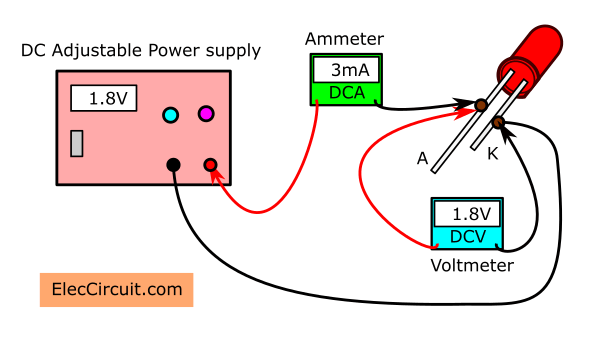
2. Measuring Forward Voltage
Connect the LED (with or without resistor) and slowly increase voltage while monitoring current — watch the point where it lights up and measure Vf accurately.
This close-up shows a power supply display capturing precise voltage and current during LED testing:
3. Testing LED Strings & Drivers
For series strings (e.g., 12V tape), set voltage to the total required and limit current to the strip's rating. For drivers, simulate load and check regulation.
See this professional setup for testing LED arrays with controlled power delivery:

4. Debugging on Breadboard
Use jumper wires from the supply to power prototypes — adjustable output makes it easy to find optimal brightness or spot flickering issues.
Here's a breadboard-based LED circuit powered and debugged with a bench supply:

Must-Have Features for LED Testing
- Fine resolution (1mV/1mA steps) for precise control
- Fast CC/CV switching with clear indicators
- Low ripple/noise for consistent LED color and brightness
- Programmable presets for common voltages (3V, 5V, 12V, etc.)
- Robust terminals for repeated connections
Recommended Kiprim Programmable DC Power Supplies for LED Projects
Kiprim models deliver excellent accuracy, strong current limiting, and user-friendly interfaces — perfect for LED testing, driver development, and lighting prototypes.
Best for most LED work (strips, modules, debugging):
- Kiprim DC310Pro 2-in-1 Programmable Power Supply and Multimeter (0-30V/0-10A) — Top choice with built-in multimeter for quick measurements
- Programmable DC Power Supply (0-30V/0-10A, 110V Input) — Reliable and cost-effective for everyday LED tasks
Higher voltage for long strings, COB LEDs, or automotive lighting:
- Kiprim DC605Pro 2-in-1 Programmable Power Supply (0-60V/0-5A)
- Kiprim DC605S Programmable DC Power Supply (0-60V/0-5A, 110V Input)
High-power LED arrays or large installations:
Explore the complete range: Kiprim DC Power Supplies Collection
Final Thoughts: Illuminate Your Projects Safely
A quality DC power supply turns LED testing and debugging from guesswork into precision engineering. With adjustable limits, real-time feedback, and robust protection, you'll catch issues early, optimize designs, and build brighter, more reliable lighting projects.
Kiprim's programmable lineup offers professional features at an accessible price — ideal for makers, hobbyists, and pros working with LEDs every day.
Power up your next LED creation with Kiprim and light the way to better results! 💡
0 Kommentare