

As a tool reviewer with over 20 years in construction and DIY projects, I've tested hundreds of laser levels—from budget-friendly entry models to professional-grade units costing thousands. In 2025, laser levels have become indispensable for anyone serious about precision work, whether you're a contractor framing a house, a tiler laying perfect floors, or a homeowner hanging shelves straight.
This ultimate laser level buying guide breaks down everything you need to know: the main types of laser levels, how accuracy works in real-world scenarios, key features to look for, popular applications, and tips on choosing the best laser level for your needs.

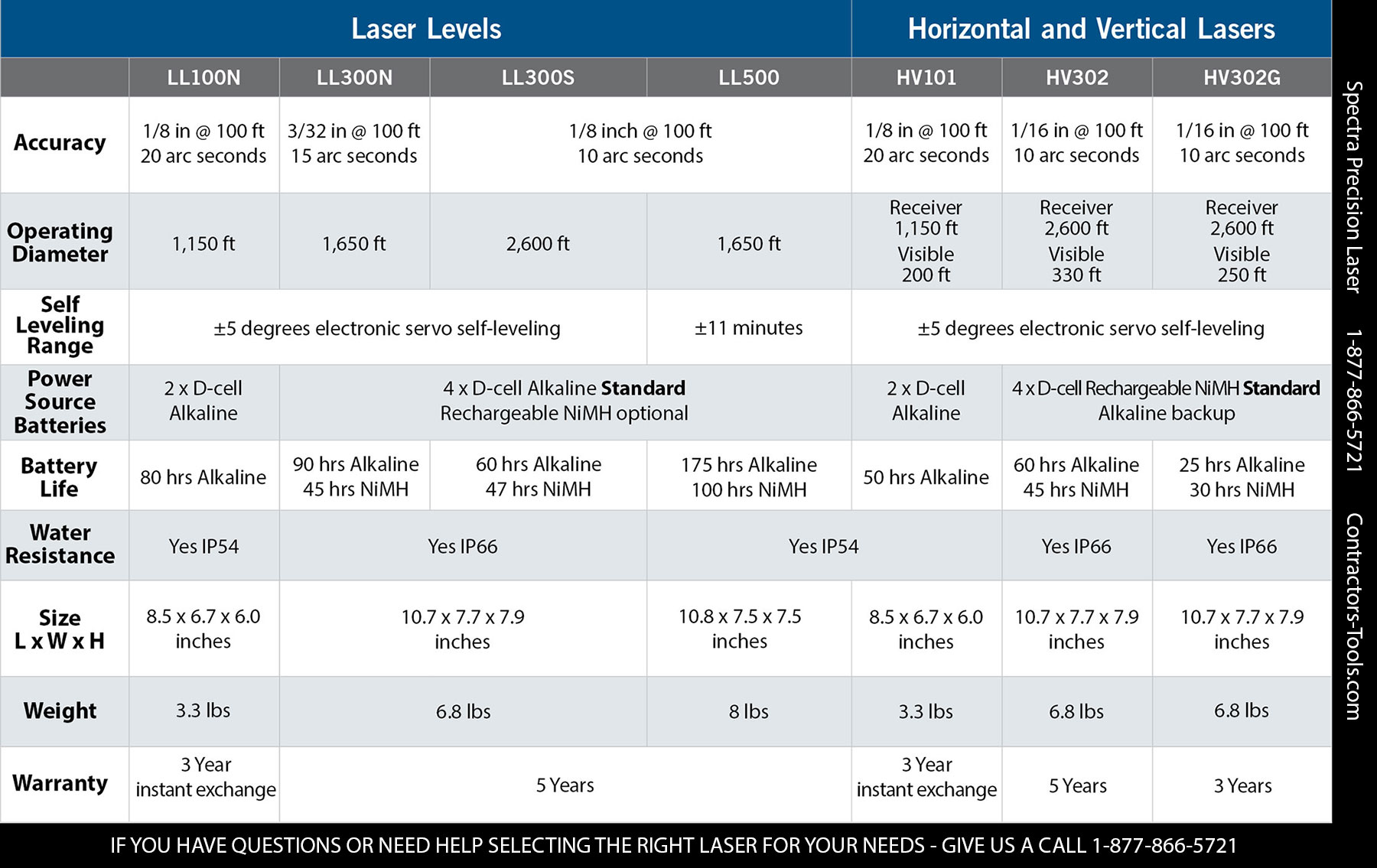
Different types of laser levels: dot, line, and rotary models compared side-by-side.
What Is a Laser Level and Why Do You Need One?
A laser level projects a bright, straight laser beam to create perfectly level or plumb reference lines over long distances. Unlike traditional bubble levels, lasers cover entire rooms or sites instantly, saving hours of measuring and marking.
Professionals use them daily for accuracy and speed, while DIYers love them for error-free results. Green lasers (more visible to the human eye) dominate 2025 models, with self-leveling tech standard even in affordable units.
Learn more basics here: What Is a Laser Level? How It Works and Why Professionals Use It
Main Types of Laser Levels
Choosing the right type is the most important decision. Here's a quick overview:
1. Line Laser Levels (Cross-Line or Multi-Line)
- Projects straight horizontal, vertical, or cross lines (often 360°).
- Best for indoor work: hanging pictures, installing cabinets, tiling, drywall.
- Compact, affordable, and easy to use.
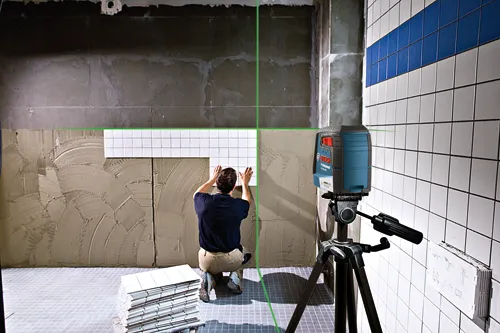
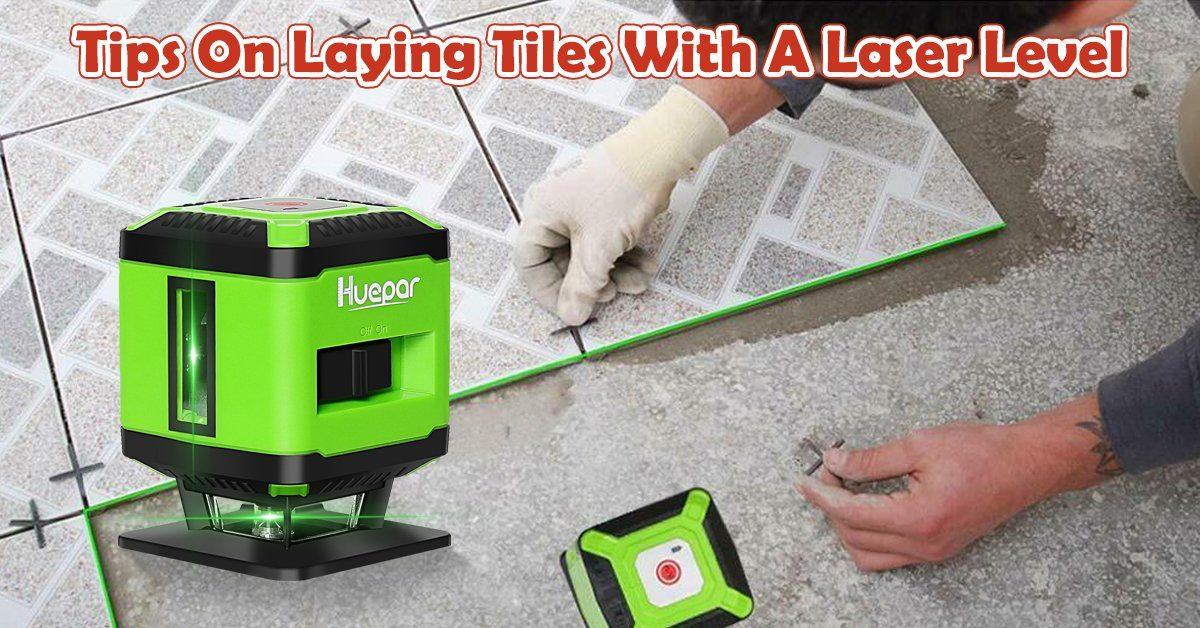
Green cross-line laser level in action during tile installation.
2. Rotary Laser Levels
- Spins a laser dot 360° to create a level plane across large areas (up to 2,000 ft with detector).
- Ideal for outdoor grading, foundation work, fencing, or large indoor spaces.
- Usually requires a tripod and receiver for bright sunlight.
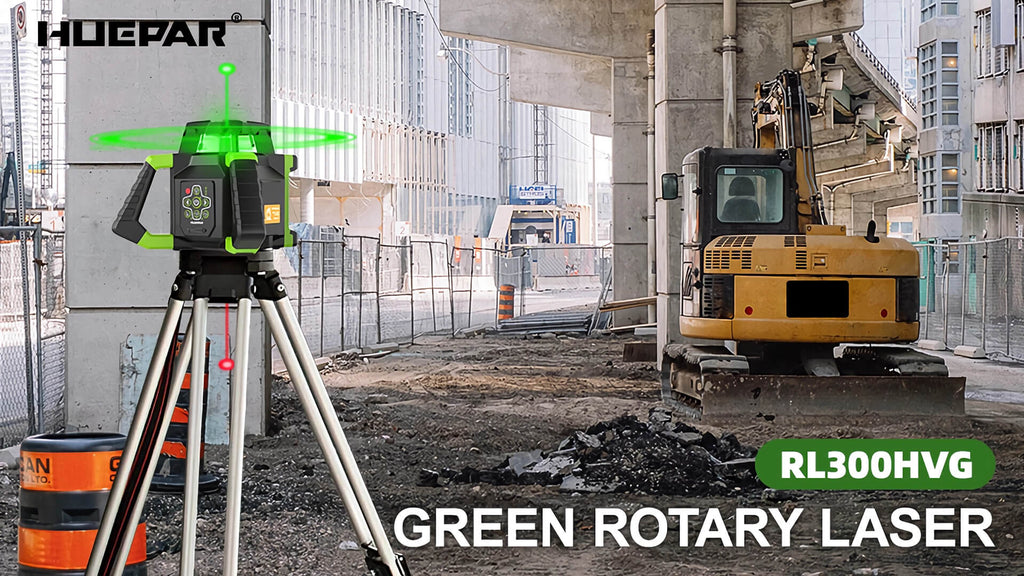
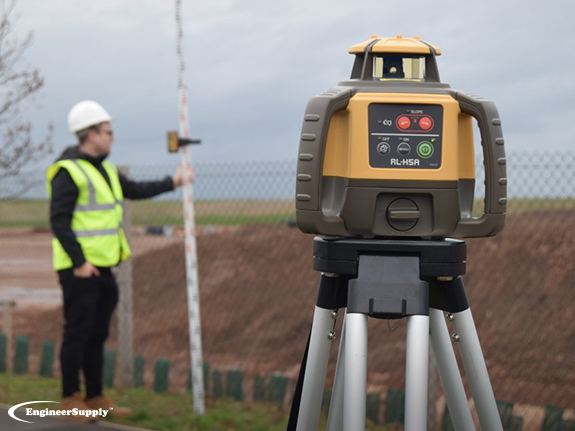
Rotary laser level set up on a tripod at a construction site.
3. Dot/Point Laser Levels
- Projects individual dots (3–5 points) for plumb and transfer tasks.
- Great for plumbing walls, electrical installations, or transferring points from floor to ceiling.
Detailed comparison: Rotary vs Line Laser Level: Which One Should You Choose?
Self-leveling vs manual models: Self-Leveling vs Manual Laser Levels: Pros and Cons
Understanding Laser Level Accuracy
Accuracy specs like ±1/8" at 30 ft or ±3mm at 10m confuse many buyers. It means the maximum deviation from true level over that distance.
- Premium models: ±1/16" at 33 ft (ultra-precise for finish work).
- Mid-range: ±1/8" at 30 ft (perfect for most construction and tiling).
- Budget: ±1/4" or worse (fine for casual DIY).
Green beams are 4x brighter than red, improving visibility and effective accuracy outdoors.

Close-up accuracy test showing laser line alignment with precise measurements.
Full explanation: Laser Level Accuracy Explained: What Does ±1/8" Mean?
Key Features to Consider in 2025
- Self-Leveling Range — Typically ±4°; wider is better for uneven surfaces.
- Beam Color — Green for superior visibility.
- IP Rating — IP54+ for dust/water resistance on job sites.
- Mounting Options — Magnetic, tripod thread (1/4" or 5/8"), wall brackets.
- Battery Life & Pulse Mode — For use with detectors outdoors.
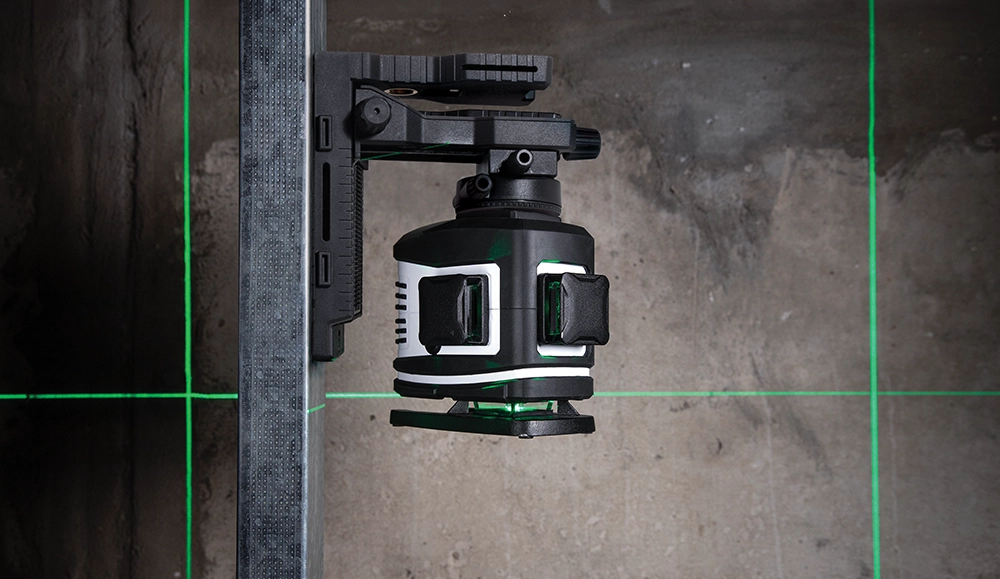
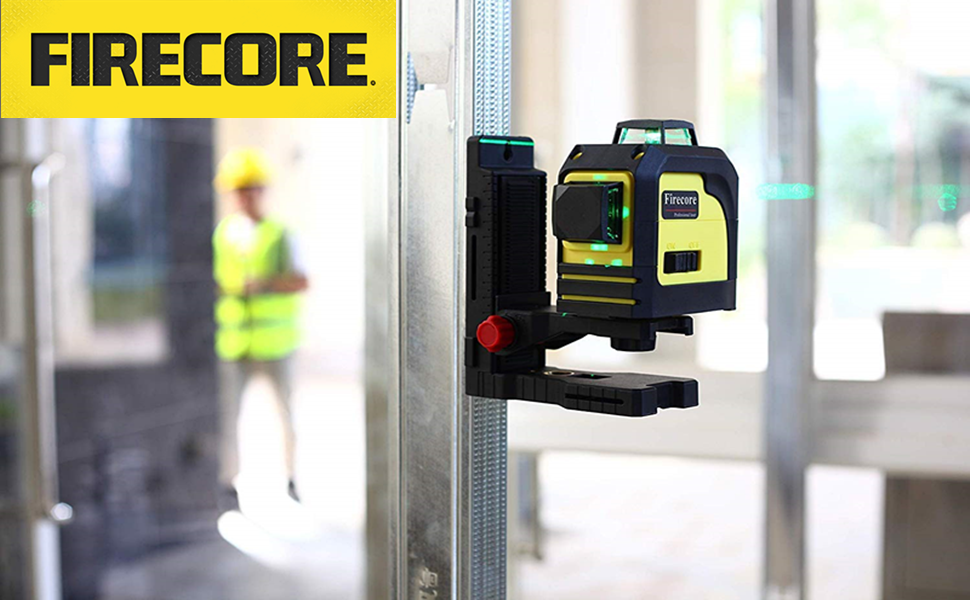
Magnetic and tripod mounting options for versatile setup.
Popular Applications
- Tiling & Flooring → Cross-line for perfect grids. Step-by-Step Guide: How to Use a Laser Level for Tile Installation
- Construction & Framing → Rotary for site leveling.
- Home Renovation → Multi-line for cabinets, shelves, drop ceilings.
- Electrical/Plumbing → Dot lasers for outlets and pipes.
Top recommendations by use case: Best Laser Level for Construction, Tile, and Home Renovation
Avoid common pitfalls: Common Laser Level Mistakes and How to Avoid Them
Kiprim Laser Levels: Reliable Performance at Great Value
If you're shopping in 2025, check out Kiprim's lineup of green self-leveling laser levels—known for bright beams, durable build, and user-friendly features that punch above their price point.


Kiprim green laser levels deliver excellent visibility for indoor projects.
Browse the full collection here: Shop Kiprim Laser Levels
Final Thoughts: How to Choose the Best Laser Level for You
- Define your main use (indoor vs outdoor, small vs large areas).
- Set a budget—solid green cross-line models start around $50–$150.
- Prioritize green beam + self-leveling.
- Read real-user reviews for reliability.
With the right laser level, you'll wonder how you ever worked without one. Straight lines, perfect alignment, and faster projects—guaranteed.
Have questions about a specific model or application? Drop a comment below—I respond to every one.
Ready to upgrade? Start with the Kiprim Laser Level Collection. Happy leveling!
0 Kommentare