

A Complete Guide to DC Power Supply for Beginners and Professionals
If you've ever used a benchtop DC power supply, you've probably noticed the indicators labeled CV and CC lighting up on the display. These two modes — Constant Voltage (CV) and Constant Current (CC) — are the heart of how modern adjustable power supplies work. Understanding them is essential for safe, precise, and efficient operation, whether you're powering circuits, charging batteries, testing LEDs, or developing electronics.
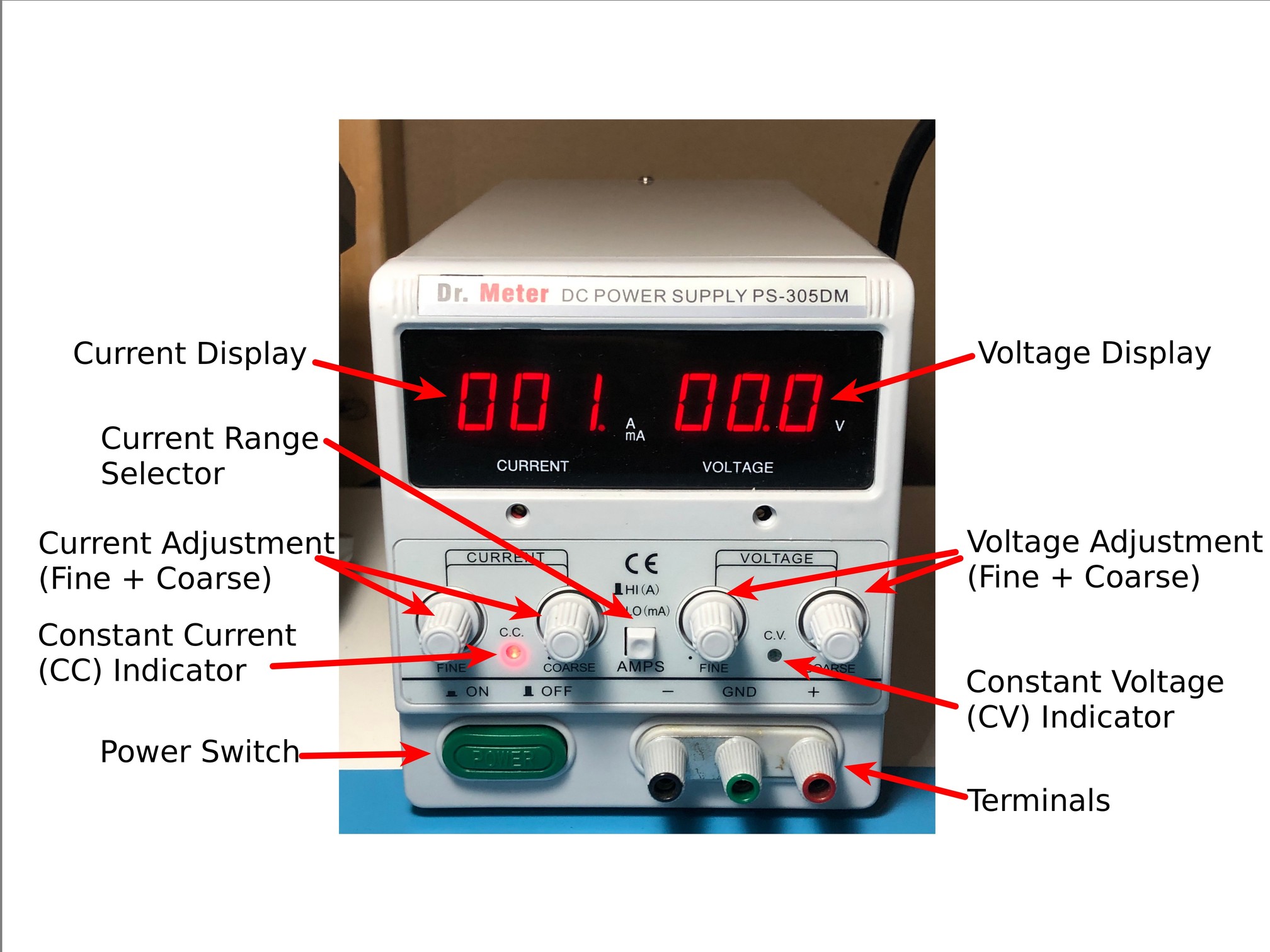
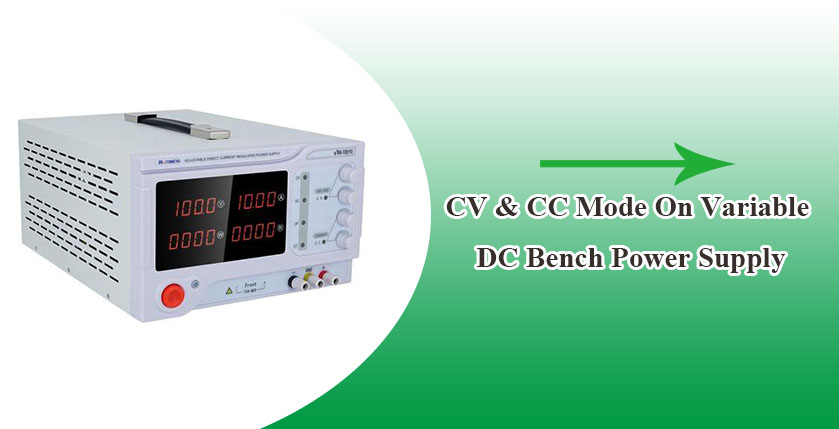
Here are some real-world examples of what these modes look like on professional lab power supplies:
What is Constant Voltage (CV) Mode?
In Constant Voltage mode (CV), the power supply maintains a fixed output voltage regardless of the load current (within its rated limits).
The supply automatically adjusts the current to whatever value is needed to keep the voltage stable. This is the default mode for most applications where you want a steady voltage source — just like a battery or a wall adapter.
Typical CV applications:
- Powering microcontrollers, Arduino/Raspberry Pi projects
- Testing logic circuits and op-amps
- General electronics prototyping
When the load draws less current than the set current limit, the CV indicator stays lit.
What is Constant Current (CC) Mode?
In Constant Current mode (CC), the power supply maintains a fixed output current regardless of the load resistance (again, within voltage limits).
The voltage automatically adjusts (drops or rises) to keep the current constant. This mode is extremely useful when you need to control current rather than voltage.
Typical CC applications:
- LED and laser diode driving (current must be precisely limited)
- Battery charging (especially Li-ion with CC-CV stages)
- Electrolysis, electroplating, or testing components under constant current stress
When the load tries to draw more current than the set limit, the supply switches to CC mode and the CC indicator lights up.
How CV and CC Modes Work Together (The Automatic Crossover)
Most quality programmable DC power supplies operate in an automatic crossover system between CV and CC — no manual switching required!
Here's the key behavior:
- If the load resistance is high → current demand is low → supply stays in CV mode
- If the load resistance drops (or short circuit occurs) → current demand rises → supply hits the current limit and switches to CC mode
- Voltage drops to whatever value is necessary to maintain the set current
This protection prevents damage to both the power supply and your circuit.
The graph below beautifully illustrates the CV/CC characteristic curve of a typical power supply:

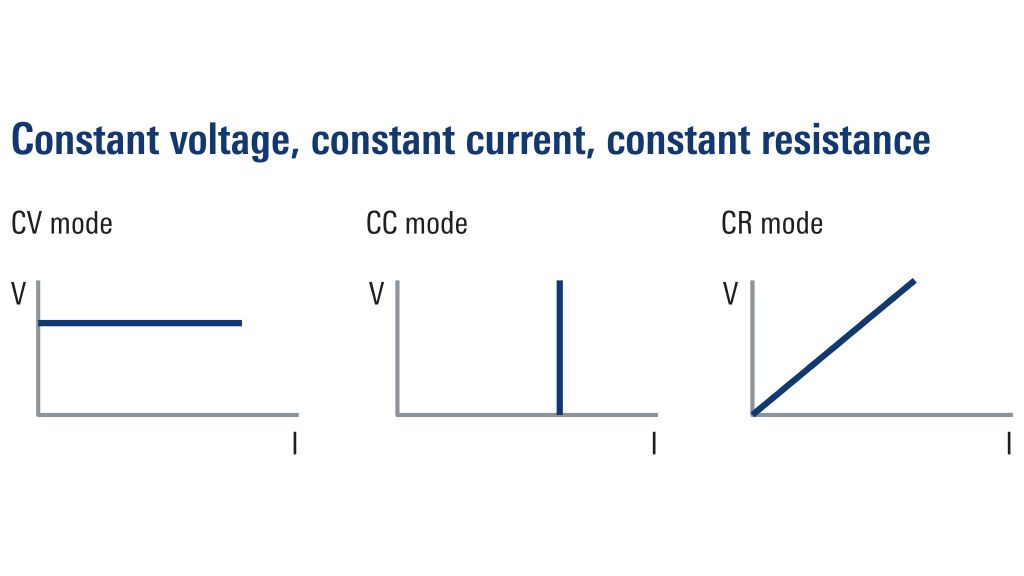
You can clearly see the flat voltage line (CV region) and the flat current line (CC region) — this is exactly how your power supply behaves in real life.
Real-World Example: Battery Charging with CC-CV
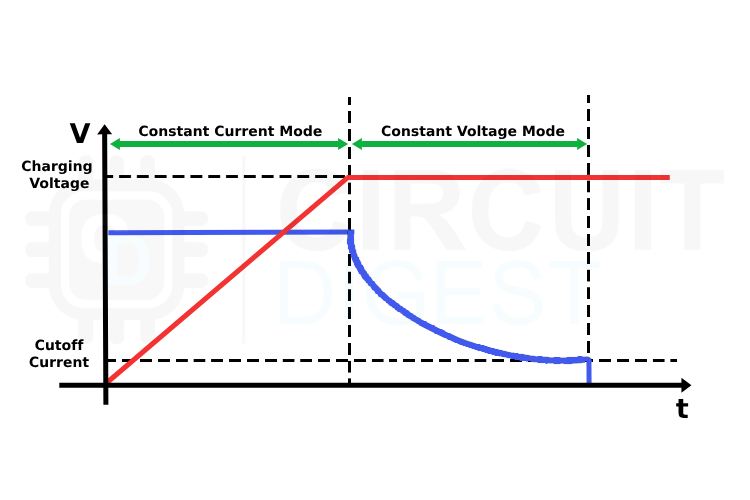
The classic CC-CV charging profile (used for most lithium-ion batteries) perfectly combines both modes:
- Constant Current (CC) phase — fast charging with maximum safe current
- Constant Voltage (CV) phase — voltage is held constant while current tapers off
This is why many Kiprim users love our programmable models for battery testing and charging.
Here’s a visual representation of the CC-CV charging curve:
Why Choose Kiprim Programmable DC Power Supplies?
All Kiprim models feature clear CV and CC indicators, precise digital control, multiple protection layers (OVP, OCP, OTP), and excellent load/line regulation — making them ideal for both hobbyists and professionals.
Explore our full collection of reliable, high-performance DC power supplies:
- Full DC Power Supply Collection — Find the perfect model for your needs
- Kiprim DC310Pro 2-in-1 Programmable Power Supply & Multimeter (0-30V/0-10A) — Versatile all-in-one solution
- Programmable DC Power Supply (0-30V/0-10A, 110V Input) — High current favorite
- Kiprim DC605Pro 2-in-1 Programmable (0-60V/0-5A) — Higher voltage option
- Kiprim DC605S Programmable (0-60V/0-5A, 110V Input) — Reliable & compact
- Kiprim DC620S Programmable 400W (0-60V/0-20A) — Heavy-duty powerhouse
Here are some of our popular Kiprim models in action:

Understanding CV and CC modes will dramatically improve your ability to use a DC power supply safely and effectively — and reduce the chance of damaging expensive components.
Have questions about which Kiprim model is right for your project? Drop us a message — we're here to help!
Happy powering! ⚡
0 Kommentare