

If you've ever wondered what a laser level is or searched for "laser level meaning," you're in the right place. In simple terms, a laser level is a precision tool that projects a straight, visible laser beam to create perfectly level (horizontal) or plumb (vertical) reference lines across surfaces—often over distances of 50–100 feet or more.
Unlike traditional tools, it allows one person to establish accurate alignment across an entire room or job site in seconds. This makes it an essential upgrade for anyone doing construction, renovation, tiling, or even simple DIY tasks.

Traditional bubble spirit level vs. modern laser level—see the evolution in precision and efficiency.
How Does a Laser Level Work? The Basic Principle Explained
At its core, a laser level uses a laser diode—similar to those in laser pointers—to generate a highly focused beam of light.
Here's a step-by-step breakdown:
- Laser Diode Generation: The diode emits coherent light (all waves in phase) when electricity passes through it.
- Optics and Collimation: Lenses collimate (straighten and focus) the beam into a narrow, straight line.
- Projection:In line lasers, prisms or cylinders split the beam into horizontal/vertical lines or crosses.In rotary lasers, a spinning head creates a 360° plane.
- Self-Leveling Mechanism: Most modern models use a pendulum or electronic sensors to automatically level within ±4°–5°. If out of range, they flash to alert you.

The result? A bright, straight reference line that's far more accurate and visible than chalk lines or bubble vials.
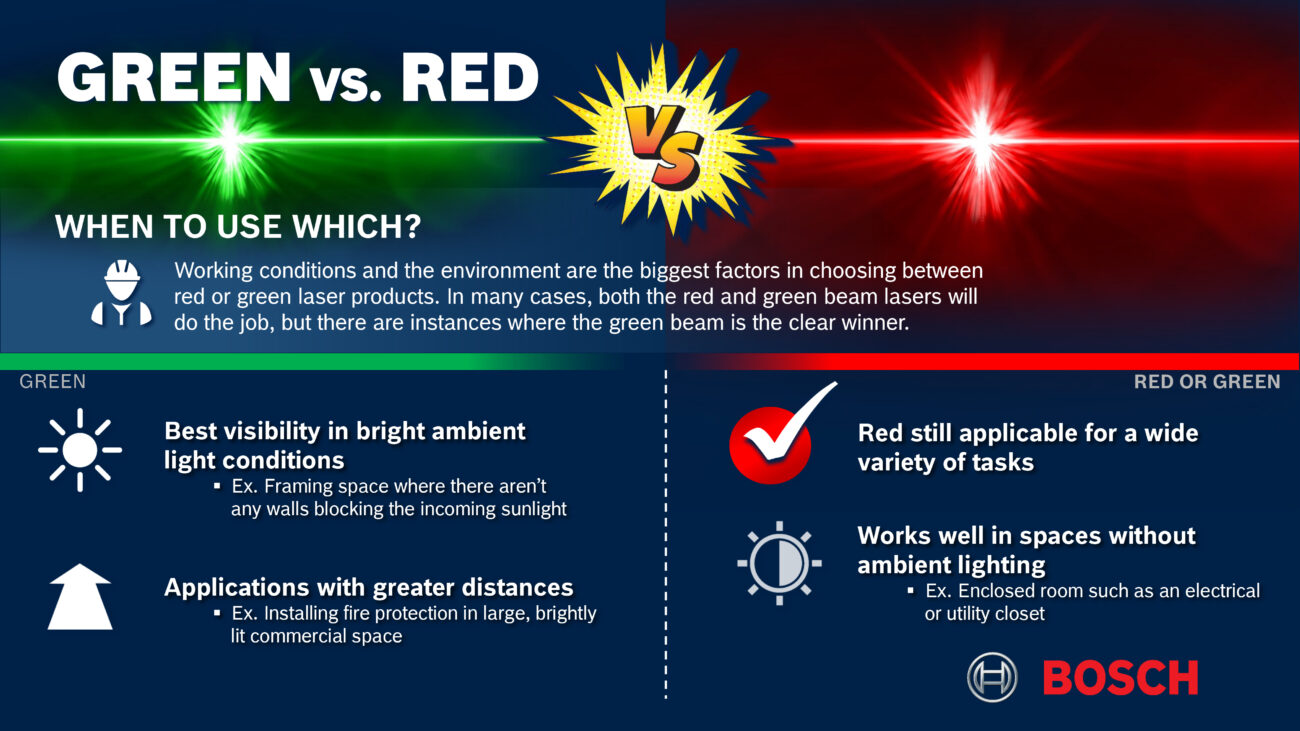
Red vs. Green Lasers: Why Visibility Matters
Early laser levels used red beams, but today green dominates—and for good reason.
The human eye is about 4–5 times more sensitive to green light (532nm wavelength) than red (635–650nm). This means:
- Green beams appear brighter and sharper, even in well-lit rooms.
- Longer visible range indoors (up to 100 ft vs. 50 ft for red).
- Better performance without needing a detector.
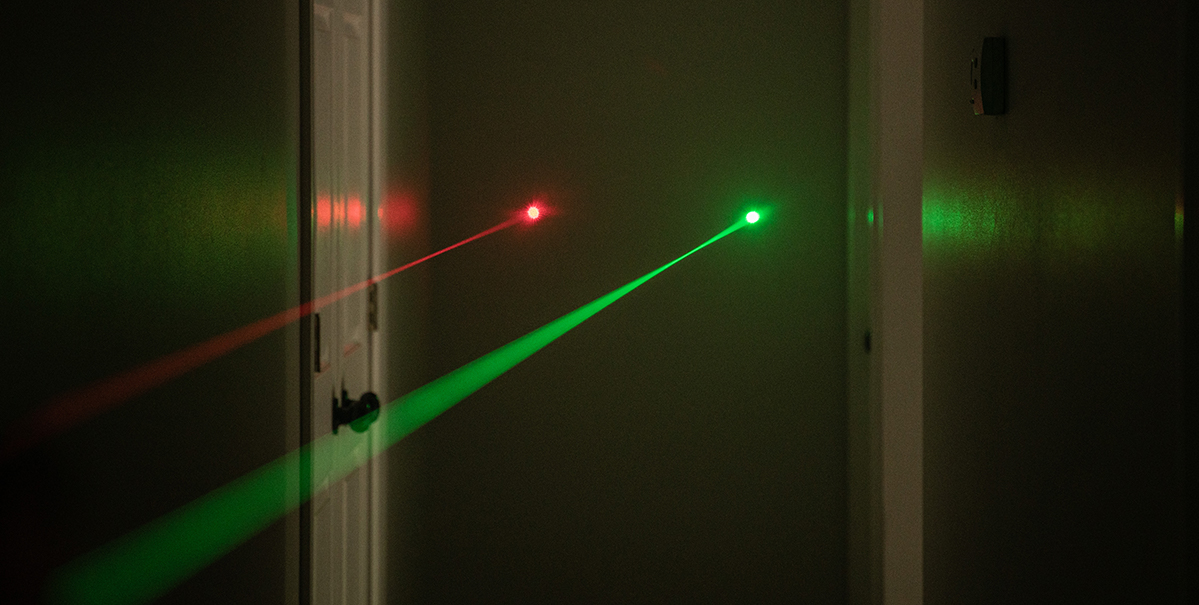
Side-by-side comparison: Green laser lines are dramatically more visible than red, especially indoors.
Why Professionals Rely on Laser Levels Daily
Contractors, carpenters, tilers, electricians, and surveyors have largely abandoned traditional bubble levels for several key reasons:
- Speed: Mark an entire room in seconds instead of measuring point-by-point.
- Accuracy: Consistent precision over long distances, reducing errors that compound in large projects.
- One-Person Operation: No need for a helper to hold the other end of a tape or level.
- Versatility: Perfect for framing, drywall, drop ceilings, flooring, cabinet installation, and site grading.
- Safety & Efficiency: Fewer trips up ladders, less rework.


Professional contractors using self-leveling laser levels on active job sites for fast, accurate alignment.
On modern job sites, a good laser level pays for itself in time saved on the first few projects.
Real-World Examples in Action
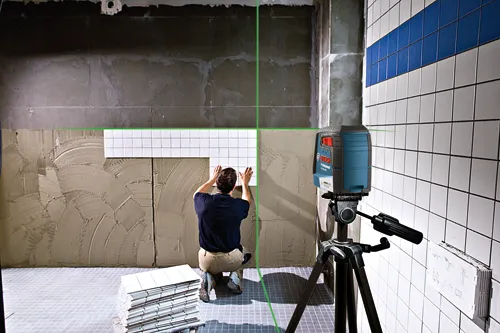

Green cross-line laser levels projecting perfect grids for tile installation and wall framing.
Discover Kiprim Green Laser Levels
If you're ready to experience the benefits yourself, Kiprim offers excellent green beam models with bright visibility, reliable self-leveling, and durable builds at accessible prices.
- Check out the upgraded Kiprim LV8 for enhanced brightness and versatility: Shop Kiprim LV8 Here


Kiprim green laser levels deliver sharp, visible lines for indoor projects.
- For more lines and coverage, try the Kiprim LV8D with 5 enhanced laser lines: Shop Kiprim LV8D Here
Browse the full lineup: Kiprim Laser Level Collection
Final Thoughts
A laser level isn't just a gadget—it's a game-changer that brings professional-grade precision to any project. Whether you're defining "what a laser level is" for the first time or upgrading your toolkit, understanding the basics (diode, optics, self-leveling, and green beam advantages) will help you choose wisely.
Questions about how laser levels work in specific scenarios? Leave a comment below—I reply to all!
Ready to get started? Explore Kiprim's Laser Levels today.
0 Kommentare