

A programmable DC power supply (also called programmable power, programmable DC source, or programmable DC supply) is a modern bench or lab power supply that lets you digitally set, store, recall, and automate voltage and current outputs—far beyond what basic manual knobs allow.
Unlike traditional adjustable supplies where you twist dials for each change, a programmable model supports:
- Precise digital entry (often 1mV/1mA resolution)
- Memory presets (save/recall multiple settings)
- PC/software control via USB, LAN, or other interfaces
- Sequence/list mode (automatic stepping through voltage/current profiles)
- Built-in timers, waveforms, and triggers
In 2026, these features make programmable supplies essential for efficiency, repeatability, and advanced testing.
For the full picture on all DC power supply types and features, see our Ultimate Guide to DC Power Supply (2026): Types, Features & Buying Tips.
What Exactly Makes a DC Power Supply "Programmable"?
At its core, a programmable DC power supply adds digital intelligence to standard CV/CC (constant voltage/constant current) regulation.
Key programmable elements include:
- Digital Control Interface — Front-panel keypad, rotary encoder, or touchscreen for exact setpoint entry.
- Memory & Preset Slots — Store dozens of voltage/current combinations for instant recall (e.g., 3.3V for MCU, 12V for motors, 5V for USB).
- Remote/Programmable Control — Connect to a computer, PLC, or test system using SCPI commands over USB, RS-232, LAN, or GPIB.
- List/Sequence Mode — Define timed ramps, steps, or arbitrary waveforms (e.g., simulate battery discharge or power cycling).
- Advanced Protections & Monitoring — Real-time logging, over-voltage/current/temperature protection, and output delay.
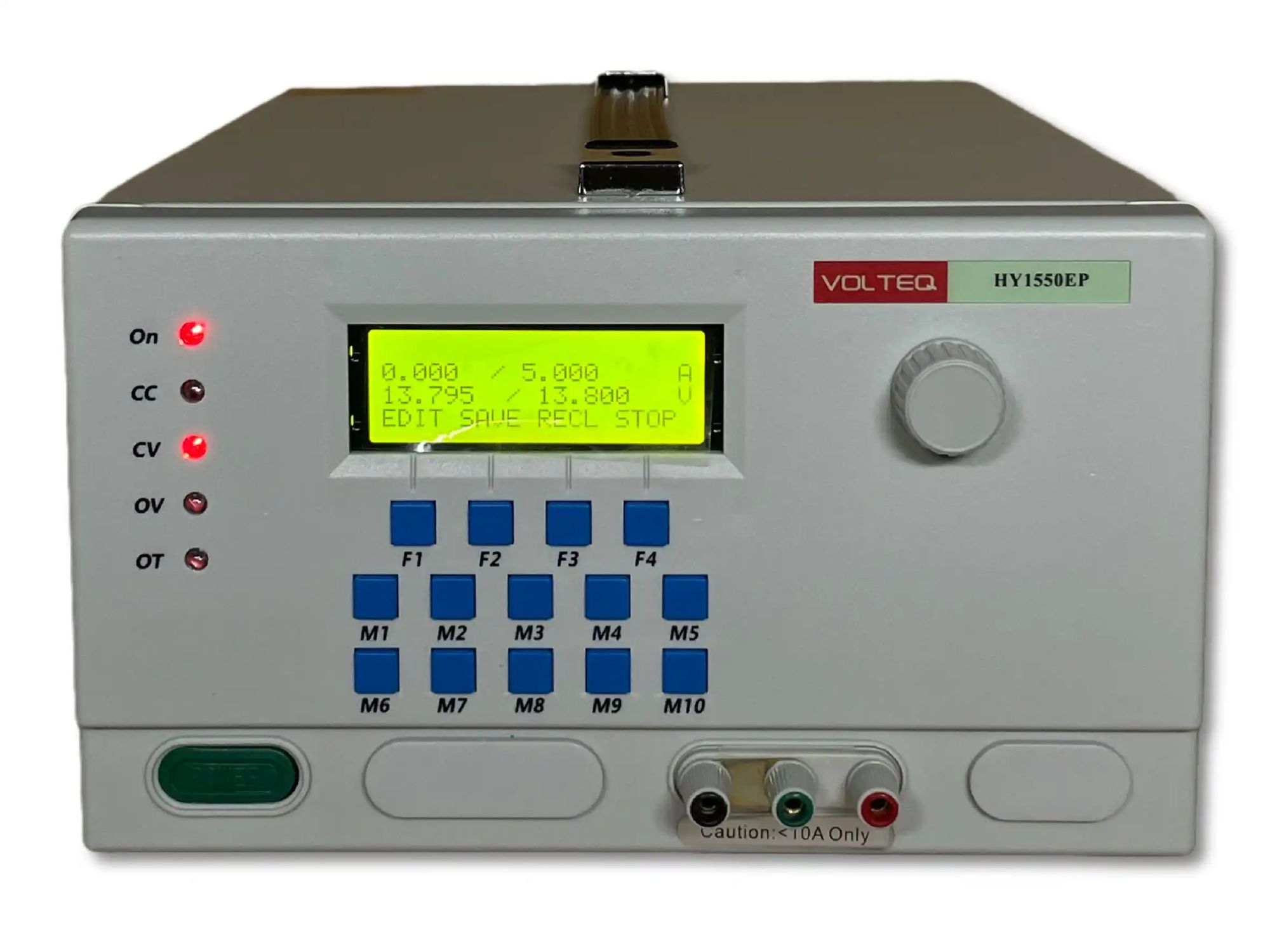
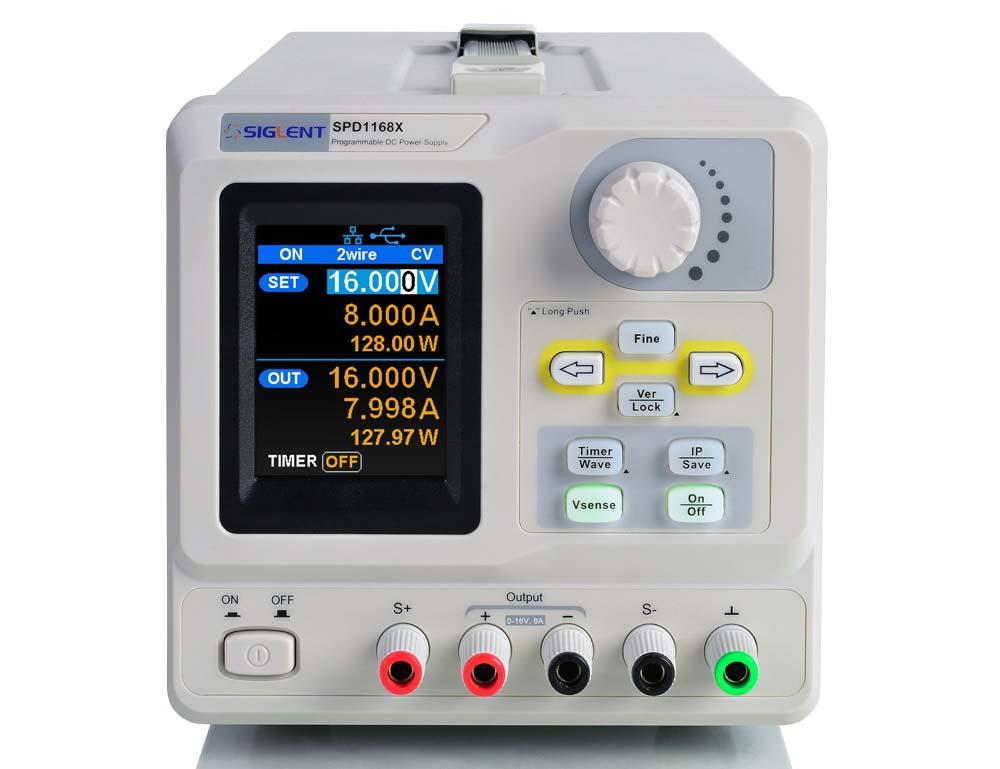
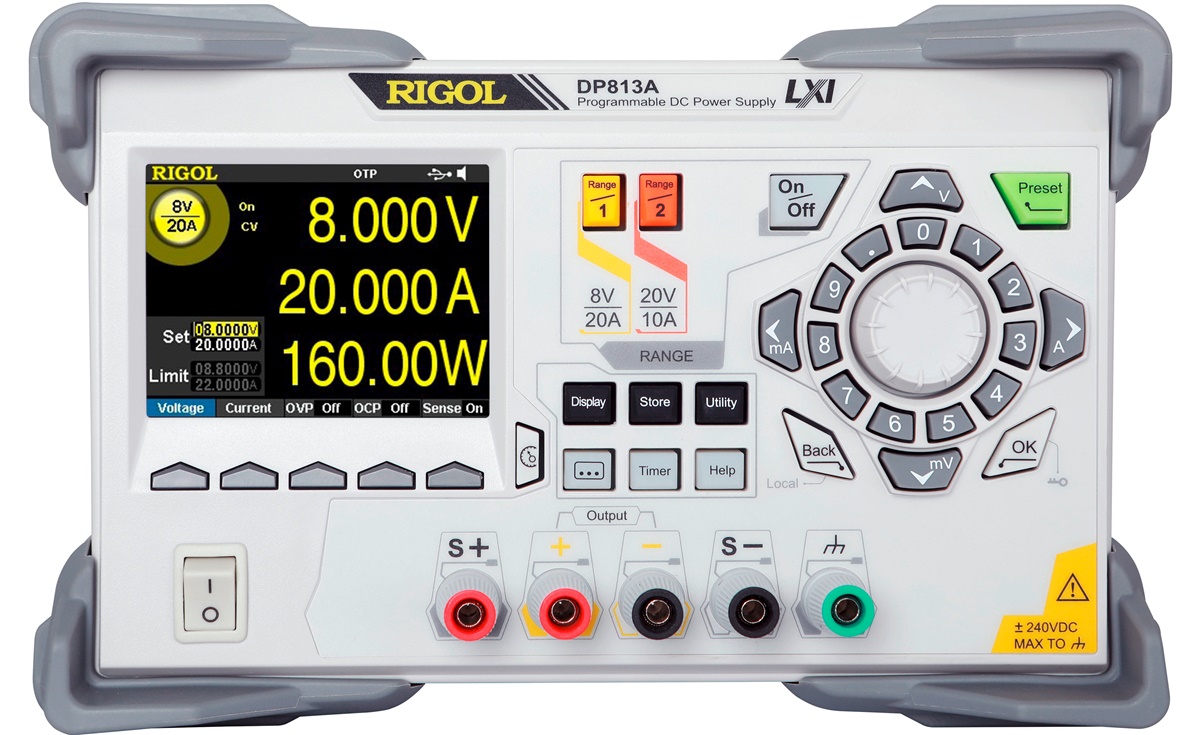
These examples show typical programmable front panels with clear digital displays, memory buttons, and function keys.
Key Advantages of a Programmable DC Power Supply
- Automation & Repeatability Run the same test sequence thousands of times without manual intervention—perfect for burn-in, aging tests, or production validation.
- Higher Precision & Resolution Fine adjustments down to millivolts/milliamps ensure accurate biasing, sensor calibration, or low-power device testing.
- Remote Control & Integration Control from Python, LabVIEW, MATLAB, or custom scripts. Ideal for automated test equipment (ATE) setups.
- Time Savings Recall presets instantly instead of re-adjusting every time. Sequence mode handles complex profiles automatically.
- Enhanced Safety & Monitoring Built-in timers, output delays, and data logging reduce risk of damage and provide traceability.

Real-world setups: powering circuit boards during repair or advanced lab testing with remote monitoring.
Common Applications for Programmable DC Power Supplies
- Automated Testing & Quality Control — Cycle power for reliability stress tests, endurance runs, or production line verification.
- R&D and Prototyping — Simulate battery profiles, power sequencing for ICs, or dynamic loads for power electronics.
- Battery Charging & Simulation — Replicate discharge curves or charge algorithms with precise control.
- Component Characterization — Sweep voltage/current to plot efficiency, dropout, or regulation curves.
- Education & Training — Demonstrate concepts with repeatable, safe settings.
- Embedded Systems Development — Provide clean, programmable power for microcontrollers, sensors, and RF modules.
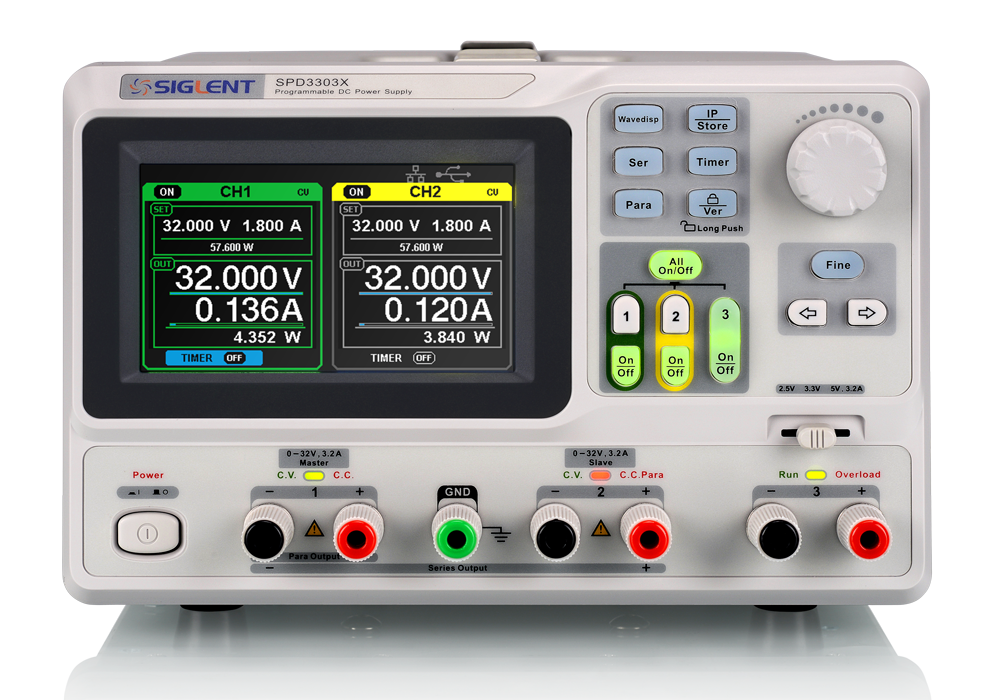
Multi-channel or advanced programmable units in professional R&D environments.
Recommended Use Scenarios: When You Should Upgrade to Programmable
You need a programmable DC power supply if:
- You repeat the same voltage/current settings frequently (save hours with presets).
- You're automating tests or integrating with software/scripts.
- Precision matters (e.g., <1% error in low-current or sensor work).
- You work on power-sensitive devices (battery sim, low-noise analog).
- Your projects involve sequencing, ramps, or timed outputs.
- You're in a lab, production, or professional engineering role.
For hobbyists starting out, a basic supply may suffice—but as soon as repeatability or automation becomes key, programmable is the smart upgrade.
Top Kiprim Programmable DC Power Supply Recommendations
Kiprim delivers excellent programmable performance with intuitive interfaces, solid build quality, and great value.
- Kiprim DC620S Programmable 400W (0-60V / 0-20A) — High-power choice for demanding automation and industrial testing. Buy Now
- Kiprim DC310Pro 2-in-1 Programmable + Multimeter (0-30V / 0-10A) — Versatile all-in-one with built-in measurement—ideal for debug and characterization. Buy Now
- Kiprim Programmable DC Power Supply (0-30V / 0-10A, 110V Input) — Reliable everyday programmable unit with PC control. Buy Now
- Kiprim DC605Pro 2-in-1 Programmable (0-60V / 0-5A) — Balanced mid-range with extra utility features. Buy Now
- Kiprim DC605S Programmable (0-60V / 0-5A, 110V Input) — Clean, focused programmable performance. Buy Now
Ready to bring automation, precision, and control to your workbench? Explore these Kiprim programmable DC power supplies today and level up your electronics projects.
0 Kommentare